

MadBlog
Calamari sandwich in Madrid: 5 spots near Gran Vía
Learn the history of Madrid's calamari sandwich and find 5 top places near Gran Vía to enjoy this iconic dish, both classic and modern.
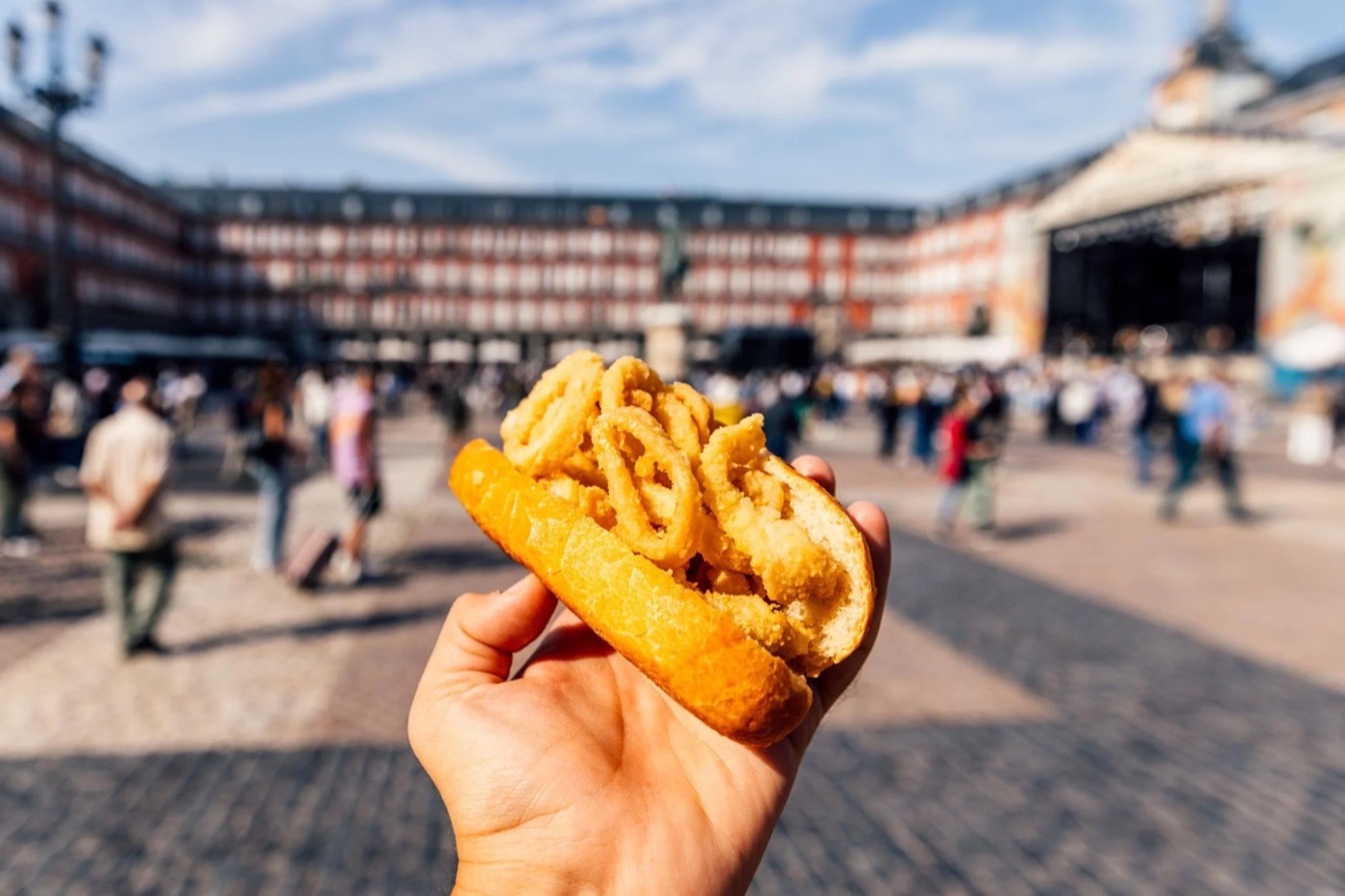
There’s a very Madrid moment that happens every day in the city centre: someone walks out of a bar with a sandwich wrapped in paper, holding it like a torch, and with the first bite, they get the city. Crunchy bread + fried calamari + beer. No cutlery. No ceremony. And yet, with a lot of history behind it.
If you’re staying at MadVibes Gran Vía, this is the perfect plan: take the walking route (Sol/Plaza Mayor/Chueca are close by), tick off your “Madrid ritual” for the day… and come back for a proper rest.
How a landlocked city fell in love with calamari (and put it in bread)
The calamari sandwich wasn’t born from a single “great idea.” It came from a very Madrid combination: logistics + religion + migration + street life. And that’s why it’s so iconic.
1) 16th century: Madrid was already eating fish (even if it sounds impossible today)
When Madrid became the political centre of the Spanish Monarchy, fish arrived from Galicia and the Cantabrian coast. Not in refrigerated trucks: it came on muleback via trade routes (run by the maragatos, a mule-driving community) over several days. Snow pits were used in winter to preserve it, lasting into part of the summer.
That fact changes everything: Madrid didn’t have a coastline, but it did have hunger and a supply network that became more sophisticated over the centuries.
2) 18th–19th centuries: Madrid operates as an “inland port”
Over time, logistics improved. In the 18th century, the postal system sped up fish deliveries; later, the railway established direct connections to the coasts. The result: Madrid wasn’t a port, but it operated like one (receiving, distributing and consuming seafood as a normal part of life).
Here’s a key nuance: old Madrid recipe books are full of bream, tuna, sardines… but calamari wasn’t the star just yet.
3) Religion also shaped the menu: Lent and “meat-free meals”
For centuries, Catholic tradition restricted meat consumption during periods like Lent, pushing even the working classes towards seafood. Practical and affordable options (like pickled fish sold in large containers) became popular.
It wasn’t the only reason, but it was a strong driver: in a large city with a tradition of eating fish at certain times, whatever was cheap, easy and filling naturally won out.
4) 19th century: Andalusia, taverns, frying… and the idea of “pescaíto”
From the 19th century onwards, Madrid embraced new culinary influences, with Andalusian cuisine making a strong mark: taverns, colmaos (traditional Andalusian bars) and fried food became part of the urban landscape.
This brought the perfect “language” for calamari: battering, frying, serving quickly and with the lively energy of a bar.
5) Internal migrations: those who knew how to cook seafood ended up cooking it in Madrid
Another factor was internal migration within Spain. Many domestic workers in bourgeois households came from coastal regions (Galicia, Asturias), bringing their knowledge of seafood and its preparation. Over time, some of this expertise made its way into eateries and taverns.
And then came the “perfect ingredient” for the city:
6) 1960s: the sandwich conquers the streets (and takes up residence in Plaza Mayor)
The massive rise came in the 20th century, especially in the 1960s: young people from the suburbs came into the centre, and around Plaza Mayor, the sandwich became cheap, filling and easy to eat standing up. Newspapers even described streets filled with its unmistakable aroma.
And that’s where it became a symbol: it wasn’t haute cuisine, but it didn’t need to be. It was urban food: straightforward, popular and memorable.
How to order it “properly” in Madrid (without overthinking it)
5 places near Gran Vía for a calamari sandwich (short and useful recommendations)
All of these are within walking distance from Gran Vía or a short metro ride away.
1) Bar Postas (Sol–Plaza Mayor)
Where: Calle de Postas, 13. Tourist area Sol / Gran Vía. Opening hours (Turismo Madrid): Thu–Tue 8:00–23:00 (closed Wednesdays). Why go: classic fried food vibes, no frills: you go in, order, and leave with your sandwich. Order: sandwich and beer; the sandwich price has been reported as €5 in the press. Tip: if your priority is avoiding the “tourist rush,” go outside the 13:30–15:30 peak.
2) La Ideal (Botoneras, next to Plaza Mayor)
Where: Calle Botoneras, 4. Sol / Gran Vía area. Opening hours (Turismo Madrid): Mon–Sun 8:30–23:00. Why go: quick counter service and a very “city centre tradition” sandwich, ideal for eating on the go. Order: sandwich + drink and continue your route towards Sol in 5 minutes. Tip: if there’s a queue on Botoneras, decide quickly: the charm here is the fast pace.
3) La Campana (Botoneras, the other classic on this strip)
Where: Calle Botoneras, 6. Sol / Gran Vía area. Opening hours (Turismo Madrid): Sun–Thu 9:00–23:00; Fri 9:00–0:00; Sat 12:00–1:00. Why go: it’s the kind of place where you “stop here, grab it and go,” perfect for a walk without too much downtime. Order: a “to-go” sandwich if it’s packed; the price has been reported as €4.50. Tip: if comfort is your plan, eat it sitting at a quiet spot along the way and head back to Gran Vía.
4) Hermanos Vinagre (Chueca – Gravina) (nearby, with a more modern twist)
Where: c/ Gravina, 17 (Chueca). Opening hours (official website): Sun–Wed 12:00–23:00; Thu and Sat 12:00–24:00; Fri 12:00–01:00. Why go: a traditional Madrid aperitif with a contemporary touch; ideal if you want something very close to Gran Vía without diving into the density of Plaza Mayor. Order: their calamari sandwich (€7.95), listed on the menu. Tip: pair it with vermouth if you’re in an afternoon mood, and walk back to MadVibes for a short stroll.
5) El Lince (Chueca – Plaza Pedro Zerolo) (a “mollete” calamari version)
Where: Plaza de Pedro Zerolo, 10. Opening hours (venue website): Monday to Sunday 12:00–23:30. Why go: if you fancy trying calamari with a modern twist without straying far from Gran Vía. Order: the calamari mollete (soft bread roll) with kewpie mayo and lime (€6.50), mentioned in food press. Tip: a great spot for a quick stop before heading back to rest; Zerolo is an easy point to reconnect with Gran Vía on foot.
The best calamari sandwich is the one that doesn’t ruin your day
The calamari sandwich is iconic because of its history, yes… but also because it’s practical: you eat it in the centre, integrate it into your walk, and move on. And if your base is Gran Vía, the perfect plan is: sandwich + walk + shower + silence.
MadBlog
Keep reading
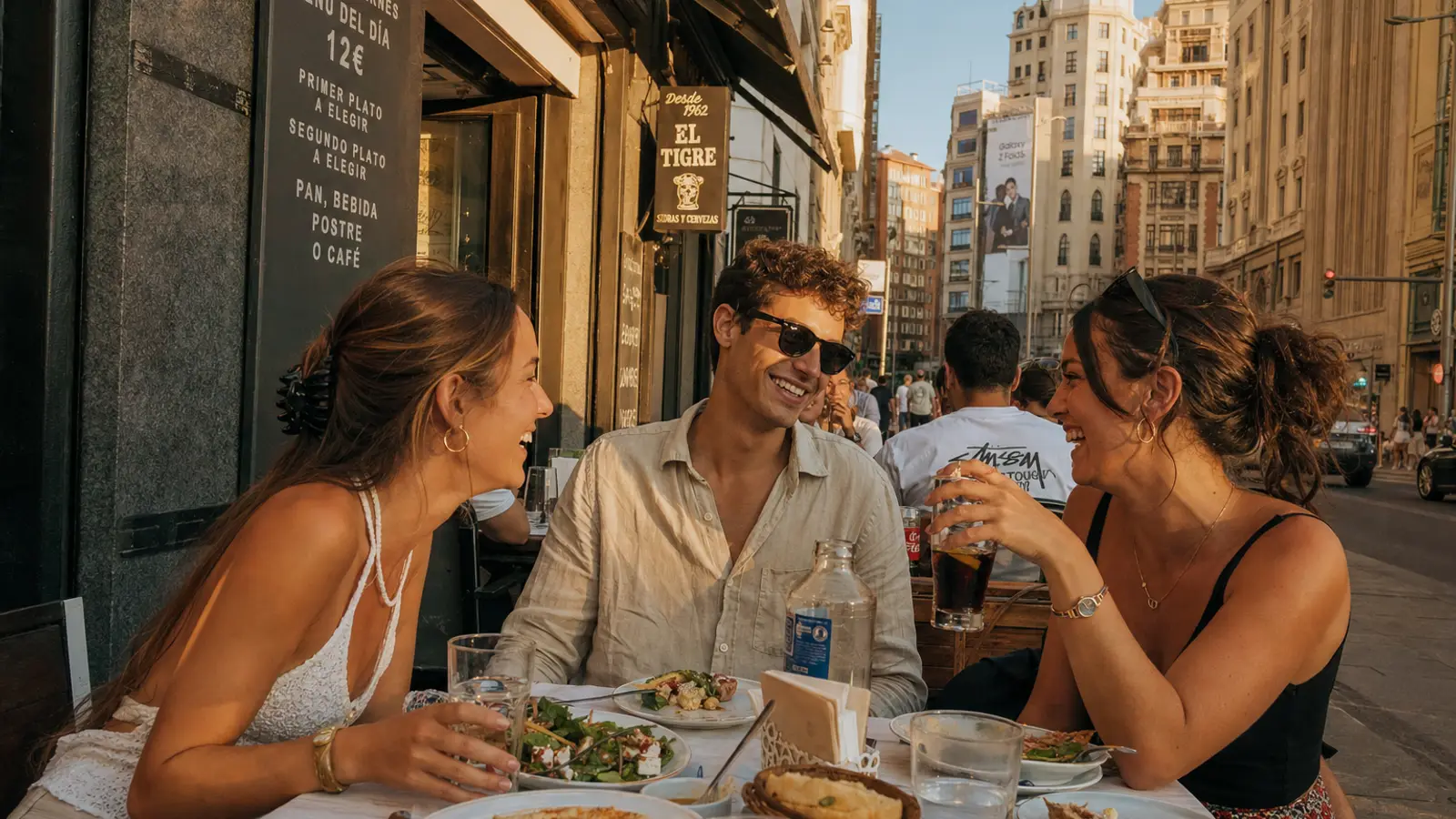
Menús del día cerca de Gran Vía: opciones ricas y económicas
Explora los mejores menús del día cerca de Gran Vía. Platos caseros, opciones vegetarianas y precios accesibles en el corazón de Madrid. ¡Descúbrelos!
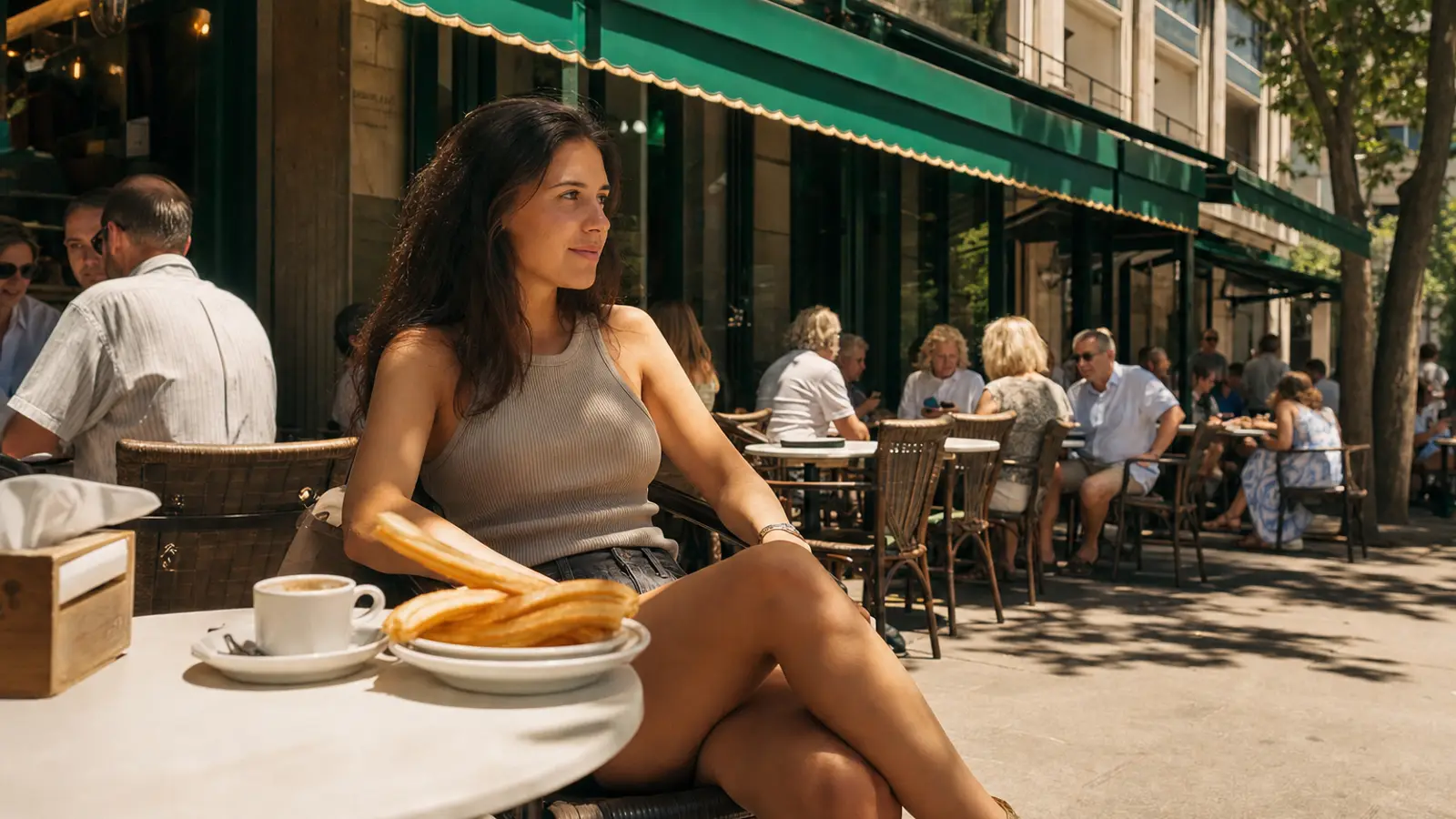
Dónde desayunar cerca de Gran Vía: 5 opciones para empezar el día
Descubre 5 lugares para desayunar cerca de Gran Vía en Madrid. Opciones desde lo clásico hasta lo moderno, todas a pocos minutos andando.
Operación Retorno 15 de agosto: atascos para entrar a Madrid
Hoy domingo, 15 de agosto, la Operación Retorno afecta a las entradas a Madrid hasta las 23h. Te damos consejos prácticos para evitar atascos y moverte.