

MadBlog
El Rastro: history, its role today and economic impact
The history of El Rastro, its current role in Madrid, and its economic impact: stalls, visitor numbers, regulations, and neighbourhood effects.
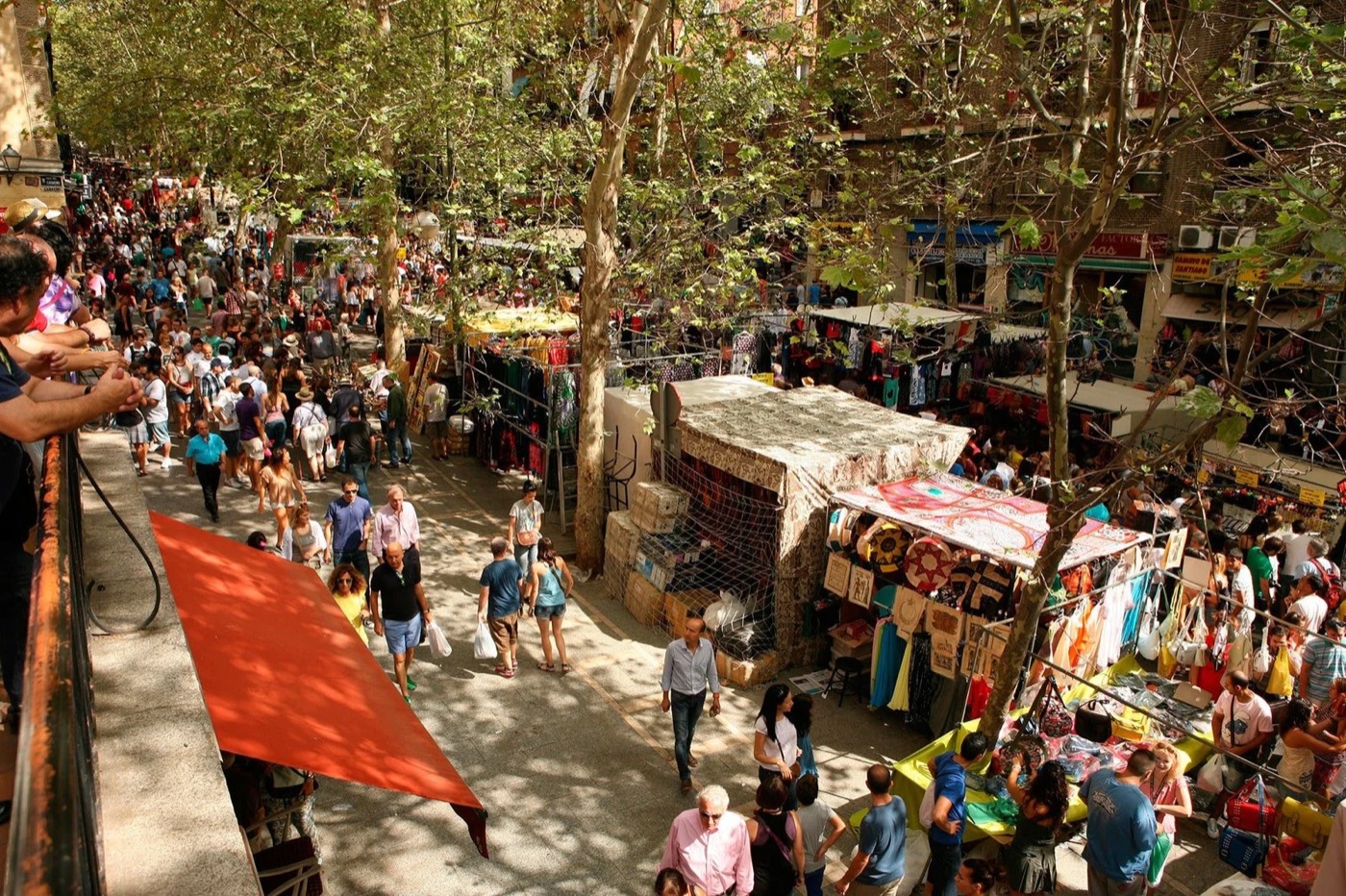
El Rastro is not just “a nice market”. It’s an urban infrastructure: a system that moves people, commerce, identity and public discussion every week. And while its most famous image is that of a Sunday morning stroll, its real importance goes beyond that: El Rastro functions as an economic and cultural barometer for central Madrid.
For MadVibes (Gran Vía), it makes sense to explain it this way: with facts, context, and a clear idea. Madrid can be intense; understanding its rituals helps you experience it better.
When did El Rastro begin?
The most solid piece of evidence to mark its documented origin is this: El Rastro has been recorded since 1740 as a meeting place for selling, exchanging and trading second-hand goods, in an area historically linked to trades and popular commerce.
However, there’s a difference between its “documented origin” and its consolidation as a large Sunday market. RTVE notes that the weekly market began in the first third of the 19th century and has since become a city ritual.
The key idea: El Rastro didn’t start as a planned event; it grew (and became big) because Madrid needed a place where used, surplus and salvageable items could find a new purpose. In a growing capital, this wasn’t folklore: it was everyday economics.
The name: an uncomfortable but very Madrid origin
The name “Rastro” doesn’t come from a pleasant metaphor. RTVE reminds us it refers to the trail of blood left by animals slaughtered in the area’s abattoirs.
This origin explains two traits that remain today:
For decades, El Rastro grew, specialised and overflowed. RTVE highlights a revealing fact: until three decades ago, there were also street stalls during the week, not just on Sundays.
This tells us something important: El Rastro wasn’t just a Sunday market but a more continuous commercial ecosystem, which over time became concentrated and regulated.
And the fact it remains a reference point today isn’t just down to “tradition” but a very Madrid combination: demand + location + social habit + regulation.
Cascorro: when a place becomes a symbol
Plaza de Cascorro is the emotional starting point of El Rastro, and its central icon confirms it: the monument to Eloy Gonzalo (“Cascorro”).
The Ayuntamiento (Monumenta) records that the monument was inaugurated by Alfonso XIII on 5 June 1902.
Why does this detail matter in a text about history and impact?
Because it marks the moment when El Rastro stopped being just a “sales area” and also became a space with public representation. A market integrated into Madrid’s imagination on the same level as its plazas and monuments.
Regulation: the key to El Rastro’s survival
If El Rastro were only about spontaneity, it wouldn’t exist anymore (or it would be something else). Its continuity depends on a clear framework.
The Ordinance (2000) and the real size of the market: “modules”
The Ordinance Regulating Sales at El Rastro de Madrid sets a figure often misunderstood: a maximum of 3,500 modules.
Here’s the important nuance: the ordinance refers to modules, not necessarily “stalls”. It also regulates size: stalls can be a minimum of 1 metre and a maximum of 3 metres long, among other technical criteria.
This explains why different sources give varying numbers of “stalls”: one stall can occupy 1, 2 or 3 modules. That’s why you might see figures ranging from hundreds to “over a thousand” stalls without contradicting the module limit.
Opening hours and space management
The ordinance also sets the operating times: Sundays and public holidays, from 9:00 to 15:00, with specific assembly and dismantling periods.
It’s not just about the schedule: it’s a way of managing capacity (pedestrians, emergencies, access), because we’re talking about a massive event in a public space.
What can and cannot be sold
The Ayuntamiento summarises it clearly: “old and unusual goods” and products included in the ordinance are allowed; food for human and animal consumption is prohibited (with very specific exceptions).
This regulation isn’t just an administrative detail: it’s part of the neighbourhood’s economic balance, as it protects coexistence and defines what kind of market El Rastro is.
What El Rastro means to Madrid today
Today, El Rastro serves three functions that coexist (sometimes with friction, but they coexist):
Madrid changes quickly. El Rastro is one of the few places where that transformation is visible in objects: what’s inherited, resold, or recirculated. This “material memory” has cultural value that’s not abstract: it attracts visitors and sustains trades.
RTVE describes a sunny morning with around 100,000 visitors. Telemadrid also mentions a Sunday attraction of about 100,000 visitors.
Beyond the exact figure, the message is clear: El Rastro is a major urban flow concentrator. And in a city, flow means economy.
El Rastro is also about coexistence: residents, permanent shops, street vendors, tourists… When everything works, the neighbourhood benefits. When it doesn’t, debates arise about public space, noise, cleanliness or mobility. The impact isn’t just economic: it’s political and urban.
Economic impact: what can be stated with data
Let’s be very honest: there isn’t a single, widely published official figure translating El Rastro into “X million euros per year”. What does exist are objective magnitudes that help understand its economic weight.
Size of the commercial fabric (direct)
Economic translation: we’re talking about hundreds/thousands of micro-businesses, many family-based, relying on a weekly, regulated and repeatable operation. That’s employment, self-employment and supply chains.
Employment and popular economy (regional context)
The same 2025 technical report provides regional sector figures: 2,774 self-employed individuals, 252 companies and 2,146 salaried jobs linked to street vending in the Comunidad de Madrid.
El Rastro, as a “cultural and commercial emblem” within this network, isn’t an anecdotal case: it’s the most visible showcase of a sector sustaining families and local economic activity.
Ripple effect on the neighbourhood (indirect)
Eldiario.es sums it up with a phrase that’s pure economics: “under normal circumstances, El Rastro is an ecosystem in balance,” where street vendors and permanent shops mutually benefit: the stalls attract crowds, and the shops “ride the wave”.
That’s indirect impact: hospitality, permanent retail, transport and services surrounding a large weekly flow.
When El Rastro stops: impact seen through contrast
During the health crisis (2020 context), the same eldiario.es report highlights very specific economic signals in the area:
We don’t use this as “today’s data” but as evidence of something structural: when El Rastro doesn’t function, the neighbourhood feels it immediately. That sensitivity is, by definition, economic impact.
Touristic and reputational value
The official Turismo de Madrid portal continues to list El Rastro as one of the key points for shopping and urban experiences. And the 2025 technical report defines it as an economic and tourist engine capable of attracting “tens of thousands of visitors” each week.
While “reputation” isn’t counted like a cash register, in cities like Madrid, reputation transforms into demand: visits, stays, spending and repeat visits.
El Rastro as Madrid in miniature
El Rastro has survived because it isn’t a trend: it’s an urban function that Madrid continues to need. Born out of the real economy (trades and exchange), it became a Sunday ritual and is now a flow engine sustaining commerce, employment and the city’s identity.
MadBlog
Keep reading
Harry Potter en Madrid: planes y rincones mágicos
Descubre planes temáticos de Harry Potter en Madrid: exposiciones, tiendas, cafeterías y actividades para fans. ¡Magia cerca de Gran Vía!
Musicales en Gran Vía 2026: todo lo que necesitas saber
Descubre los mejores musicales en Gran Vía para 2026: horarios, precios, teatros y espectáculos imprescindibles. A un minuto de MadVibes Hostel.
Apertura Madrid Gallery Weekend: arte contemporáneo gratis hasta hoy domingo
Último día para disfrutar de Apertura Madrid Gallery Weekend 2023. Arte contemporáneo gratis en galerías del centro, a minutos de MadVibes Hostel.