

MadBlog
History and essence of Madrid's Gran Vía — MadVibes Hostel
They say all roads in Madrid lead to Gran Vía. This avenue connects more than just neighbourhoods: it links eras. Here, under lights and domes, Madrid shows...
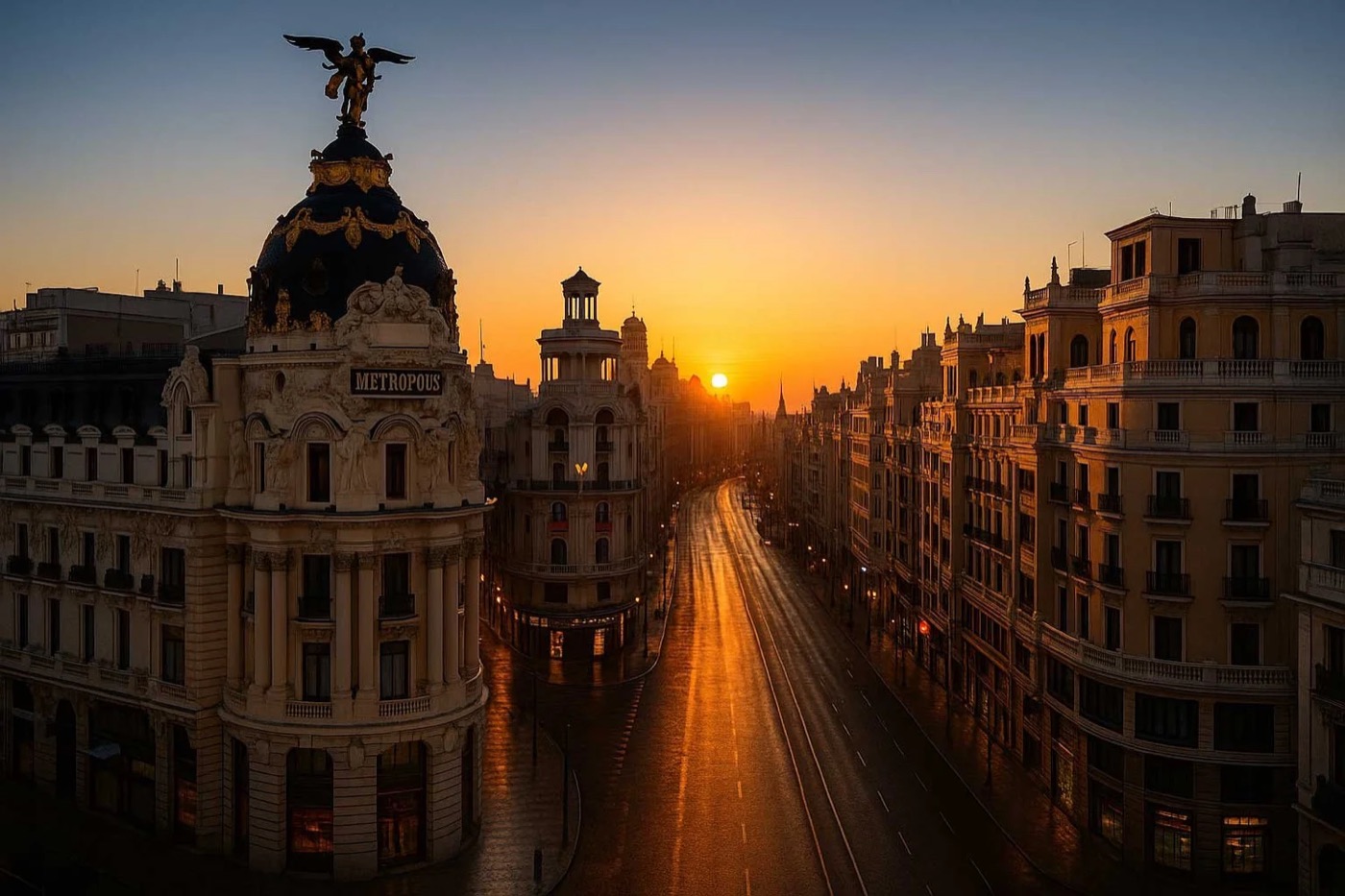
They say all roads in Madrid lead to Gran Vía. And it’s not just a saying: this avenue connects more than just neighbourhoods, it links eras. Here, under lights, domes and façades that reach for the sky, Madrid reveals its most cinematic side. From its construction in the early 20th century to today, Gran Vía has witnessed the history, art and modern life that define the city.
Gran Vía isn’t just another street in Madrid: it’s an urban experience you live, hear and feel. Its constant hum, the mix of accents, the lights flickering at night… all form the pulse of the city. It began as a modernisation project but ended up as Madrid’s beating heart.
Staying at MadVibes Hostel, located right in the heart of this artery, means lodging at the crossroads where the city moves fastest, where past and present meet.
From visionary project to urban boulevard
The origins of Gran Vía date back to the 19th century. As early as 1862, the need for a grand avenue to ease congestion in Madrid’s historic centre was proposed. However, the final design took decades: the plan was formalised around 1899 by architects such as José López Sallaberry and Francisco Octavio Palacios.
Construction began on 4 April 1910, when King Alfonso XIII ceremonially broke the “Casa del Cura” next to the San José church with a silver pickaxe, marking the start of the demolition of hundreds of homes. Over 300 houses were demolished, entire blocks were reorganised, and the urban layout was radically transformed to create the boulevard.
Gran Vía, as we know it today, was built in three sections:
Thus, construction spanned over two decades, allowing the avenue to absorb various architectural styles and urban visions.
Elegance and splendour: the golden years
Between the 1920s and 1950s, Gran Vía earned a fitting nickname: Madrid’s “Broadway”. It became home to pioneering department stores — such as Madrid‑París, Spain’s first modern-style store — major insurance companies, cinemas and theatres buzzing with activity.
Cinema played a prominent role: marquees, premieres and nightlife. Although the number of cinemas has decreased today, Gran Vía retains its reputation as the “street that never sleeps”. This golden era also had a social impact: Gran Vía became a symbol of modernity, urban leisure, cultural change and nocturnal freedom.
Architecture and urban legacy
Gran Vía is an open-air museum where styles range from neoclassicism to art deco, rationalism to interwar functionalism. The iconic Edificio Metrópolis, with its golden Winged Victory sculpture atop its dome, is one of Madrid’s most recognisable images.
The Telefónica building at number 28 was, for years, Madrid’s tallest skyscraper. In 1921, the tree-lined boulevard initially planned was removed to widen the road, demonstrating shifting urban priorities: from elegant promenade to traffic artery. Architects, engineers and developers collaborated to make Gran Vía a showcase of the modern city, and today, every façade and corner bears witness to that.
Today: urban rhythm, shopping, tourism and movement
Today, Gran Vía remains a vital axis in Madrid: shopping, entertainment, dining, nightlife and tourism blend seamlessly. While much of its original commerce has changed, its purpose remains the same: to bring Madrileños and visitors together in a space of constant energy. Recent renovations have adapted it further: for instance, parts of the avenue were pedestrianised to prioritise walkers and reduce traffic.
For travellers staying at MadVibes, this means being at the city’s epicentre: outside and inside your window, Gran Vía never stands still. Gran Vía has changed its face a thousand times, but never its essence. It remains the stage where the city reinvents itself daily: where the past converses with the present and every step holds history.
From the golden cinemas of the 1950s to today’s trendy rooftops lighting up its nights, this avenue hasn’t lost what makes it special: its boundless energy.
Staying at MadVibes Hostel means having the privilege of living all this from the inside. If Madrid is a city that never rests, Gran Vía is the reason why.
What to see and do on Gran Vía (quick mini-guide)
MadBlog
Keep reading
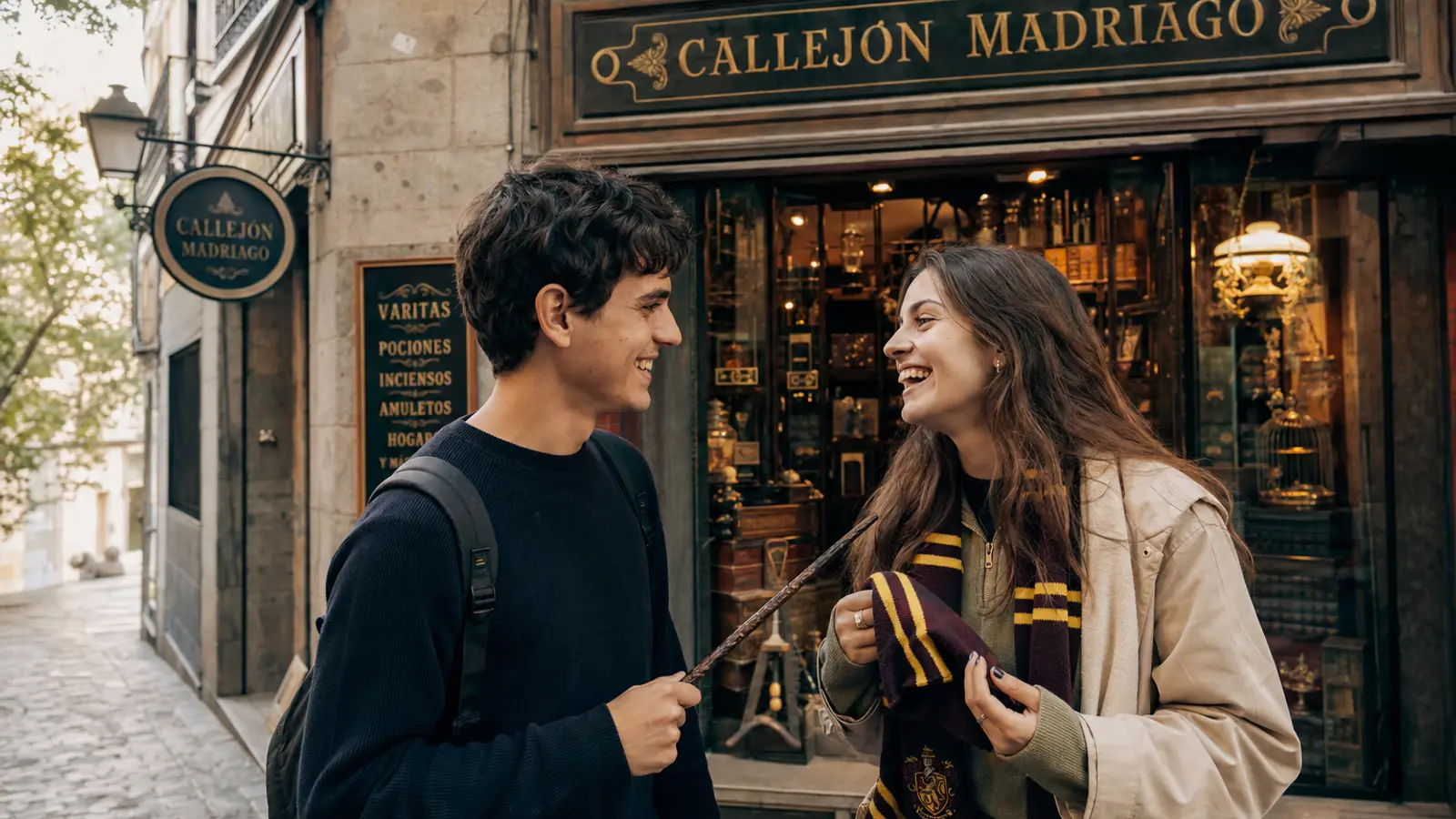
Harry Potter en Madrid: planes y rincones mágicos
Descubre planes temáticos de Harry Potter en Madrid: exposiciones, tiendas, cafeterías y actividades para fans. ¡Magia cerca de Gran Vía!
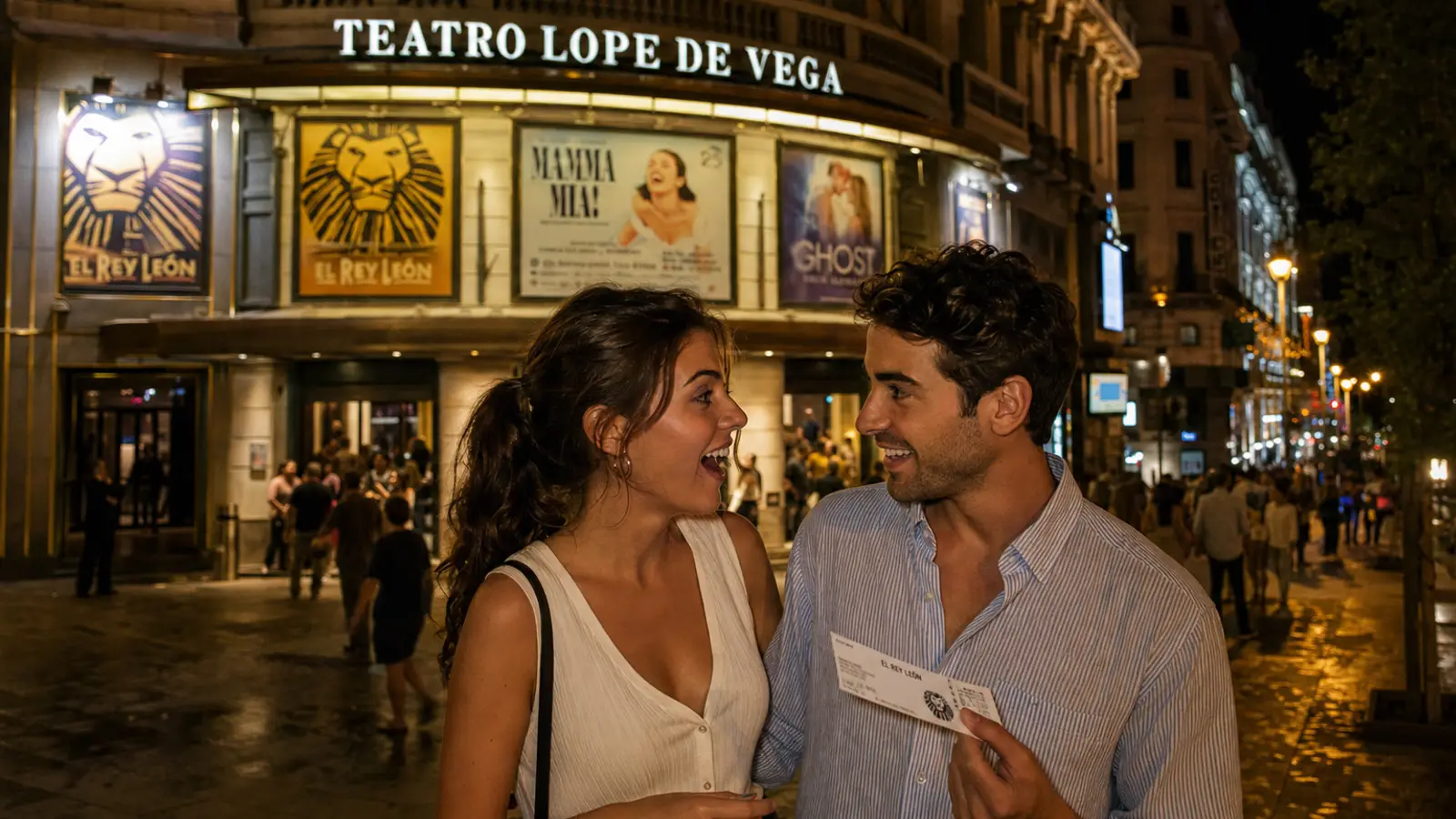
Musicales en Gran Vía 2026: todo lo que necesitas saber
Descubre los mejores musicales en Gran Vía para 2026: horarios, precios, teatros y espectáculos imprescindibles. A un minuto de MadVibes Hostel.
Apertura Madrid Gallery Weekend: arte contemporáneo gratis hasta hoy domingo
Último día para disfrutar de Apertura Madrid Gallery Weekend 2023. Arte contemporáneo gratis en galerías del centro, a minutos de MadVibes Hostel.