

MadBlog
Top 3 Museums in Madrid: Prado, Reina Sofía, Thyssen
Plan your visit to Prado, Reina Sofía and Thyssen with opening hours, ticket prices, free entry times and tips to avoid queues near Gran Vía.
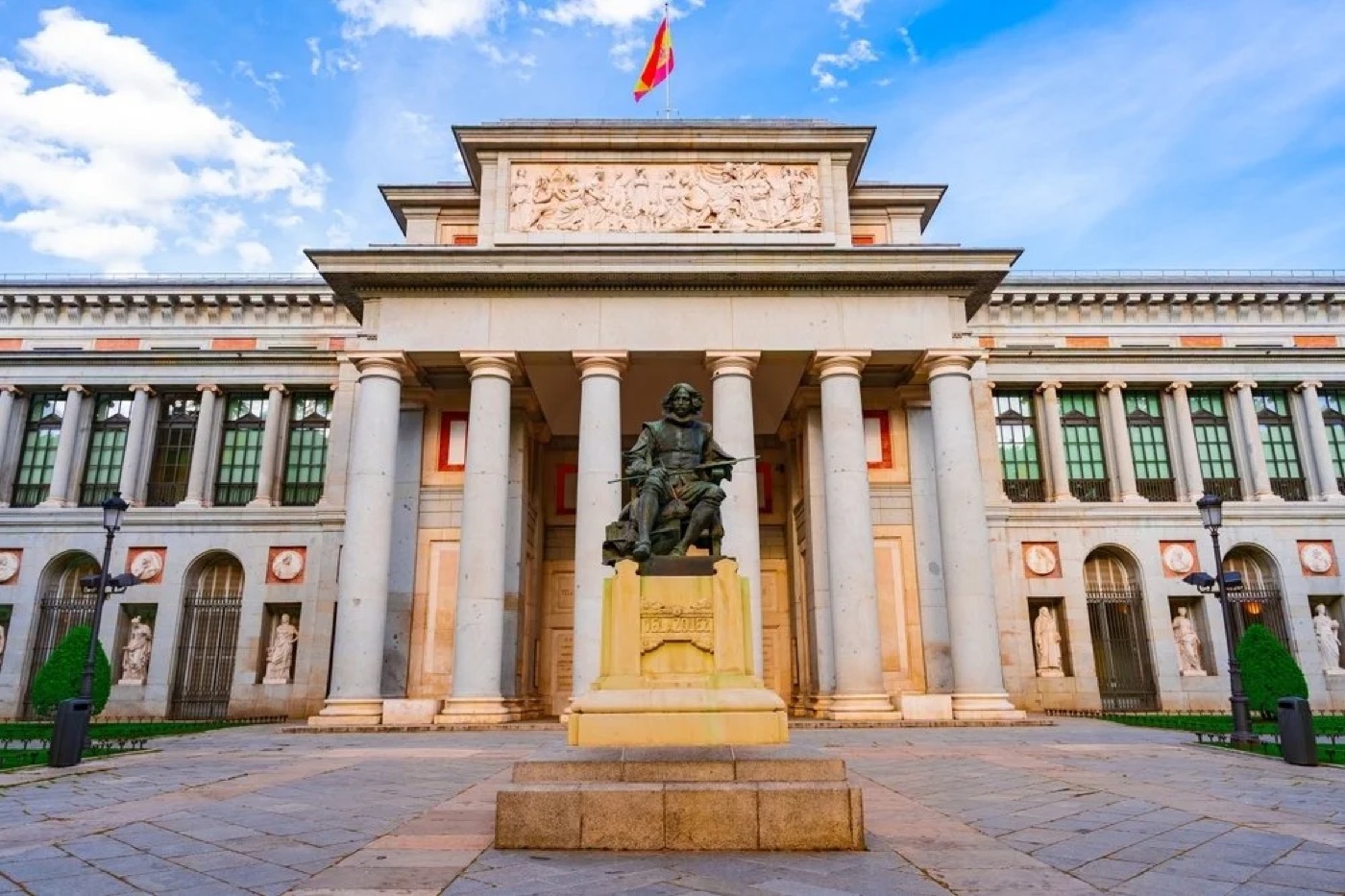
Madrid isn’t just about strolling along Gran Vía or eating a bocata de calamares (calamari sandwich). It’s about understanding what the city chose to preserve and display. Three institutions form the cultural backbone (and major tourist draw): Museo del Prado, Museo Reina Sofía and Museo Thyssen-Bornemisza.
This article isn’t about “what to see in 2 hours”. It’s something more useful if you like travelling with context: why these museums were created, their role today and their real weight in the city’s tourism. No exaggerated drama: facts, history and current insights.
The “Art Triangle” isn’t just a label: it’s a city concept
The fact that the Prado, Reina Sofía and Thyssen are within walking distance isn’t a coincidence. The Paseo del Prado and Buen Retiro axis is part of Madrid’s historical project as an Enlightenment capital: science, nature, art and public life arranged in one urban corridor.
This isn’t just for show: this area was declared a UNESCO World Heritage Site as the “Paseo del Prado and Buen Retiro, a landscape of arts and sciences” (known as the Landscape of Light).
That designation names something visitors already sense: here, art isn’t “locked away” in a building; it’s woven into the city.
1) Museo del Prado: opened as a public museum in 1819 (turning a royal collection into shared heritage)
How it came to be (1785 → 1819): from “sciences” to a great art gallery
The main Prado building wasn’t originally designed to display paintings. It was planned by Juan de Villanueva in 1785 as a Natural History Cabinet, commissioned by Carlos III.
The shift came when Fernando VII, encouraged by María Isabel de Braganza, decided to repurpose the building: to create a museum of paintings and sculptures centred on the Royal Collection.
The key “foundational” fact (the game-changer) is this: the Prado opened to the public on 19 November 1819 with 311 paintings from the Royal Collection.
What it represents in today’s society
The Prado isn’t just about “classical art”. It functions as:
How much tourism it attracts (and the tensions it creates)
In 2024, the Prado reported record figures: 3,457,057 visitors to its main site (permanent collection + temporary exhibitions). Additionally, the museum stated that around 60% of visitors were international, and 45% entered for free (2024 data).
This highlights a current debate in Madrid: the Prado no longer competes to “be bigger” but to offer a more sustainable experience. Media have openly discussed crowd pressure and the need to manage capacity and visit quality.
MadVibes takeaway (practical): the Prado is a “high-energy” visit. If you get it wrong (queues, peak hours, fatigue), it drains your entire day. If you get it right (planned entry + pacing), it leaves you with a sense of a complete trip.
2) Museo Reina Sofía: opened as a national museum in 1990, but the building began as a hospital in the 18th century
Before it was a museum: a building designed for care (and survival)
The Reina Sofía is literally an urban “change of skin”. Its main site (Edificio Sabatini) was conceived in the 18th century as a large hospital, part of a project to centralise and modernise healthcare in Madrid.
The hospital operated for centuries, only closing in the 1960s. After that, the building entered a limbo: there were proposals to demolish it, but its future was eventually redirected.
Its institutional birth: 1990
The official milestone is clear: the museum opened as the Museo Nacional Centro de Arte Reina Sofía in 1990, finally creating a major state museum of modern and contemporary art with an international focus.
If the Prado is “long memory”, the Reina Sofía is “uncomfortable” and contemporary memory:
How much tourism it attracts (and why its numbers fluctuate)
In 2024, the Reina Sofía recorded 1,960,249 visitors (publicly reported year-end data). To add context, the main site had 1,537,105 visitors in 2024, rising to 1,601,732 in 2025; additionally, the museum noted that its Retiro sites were closed for renovations.
A key social fact: in 2025, the museum reported that 62% of visitors to the main site entered for free (via free hours or discounts). For the city, this is significant: it shows the Reina Sofía functions as a cultural infrastructure for daily life, not just a “tourist attraction”.
3) Museo Thyssen-Bornemisza: opened in 1992, completing the narrative between Prado and Reina
A different origin: from private collection to public heritage
The Thyssen has a unique history, starting as a private collection that became public heritage. Its institutional management is through the Fundación Colección Thyssen-Bornemisza, established in 1988.
The museum opened to the public in October 1992, and just eight months later, in June 1993, the definitive sale of the main works was signed: the collection became public.
The Thyssen is the “bridge museum”. Its social role isn’t to compete with the Prado or Reina but to connect:
How much tourism it attracts (and its audience profile)
In 2024, the Thyssen recorded 951,821 visitors. A particularly useful fact to understand its position in Madrid: according to publicly shared figures, 57.6% of visitors were national and 42.4% international. In other words, besides being part of the “tourist triangle”, the Thyssen maintains a strong role in local/national cultural use.
So… how much tourism is really centred around these 3 museums?
If you add up the 2024 visits for all three (note: visits, not “unique individuals”, as someone could visit more than one), the total is 6,369,127 entries/visits.
Now, scale that to the city: Madrid received 11.2 million visitors in 2024 (and 23.3 million overnight stays).
This explains two simultaneous realities:
What they mean today (in one sentence each)
Closing thoughts: visiting an important museum isn’t about “seeing it all”; it’s about understanding why it exists
When you know when they were founded and what problem they solved (a country opening a royal collection to the public, a city transforming a hospital into a museum, a private collection becoming public heritage), the visit changes. You don’t just take photos: you read the city.
And that reading, done well, is much more enjoyable when you return to accommodation that truly lets you rest.
MadBlog
Keep reading
Menús del día cerca de Gran Vía: opciones ricas y económicas
Explora los mejores menús del día cerca de Gran Vía. Platos caseros, opciones vegetarianas y precios accesibles en el corazón de Madrid. ¡Descúbrelos!
Dónde desayunar cerca de Gran Vía: 5 opciones para empezar el día
Descubre 5 lugares para desayunar cerca de Gran Vía en Madrid. Opciones desde lo clásico hasta lo moderno, todas a pocos minutos andando.
Operación Retorno 15 de agosto: atascos para entrar a Madrid
Hoy domingo, 15 de agosto, la Operación Retorno afecta a las entradas a Madrid hasta las 23h. Te damos consejos prácticos para evitar atascos y moverte.