

MadBlog
Palacio de Cibeles: history, architecture and city views
Learn about the Palacio de Cibeles, its history, architecture, and enjoy one of Madrid's most serene panoramic viewpoints.
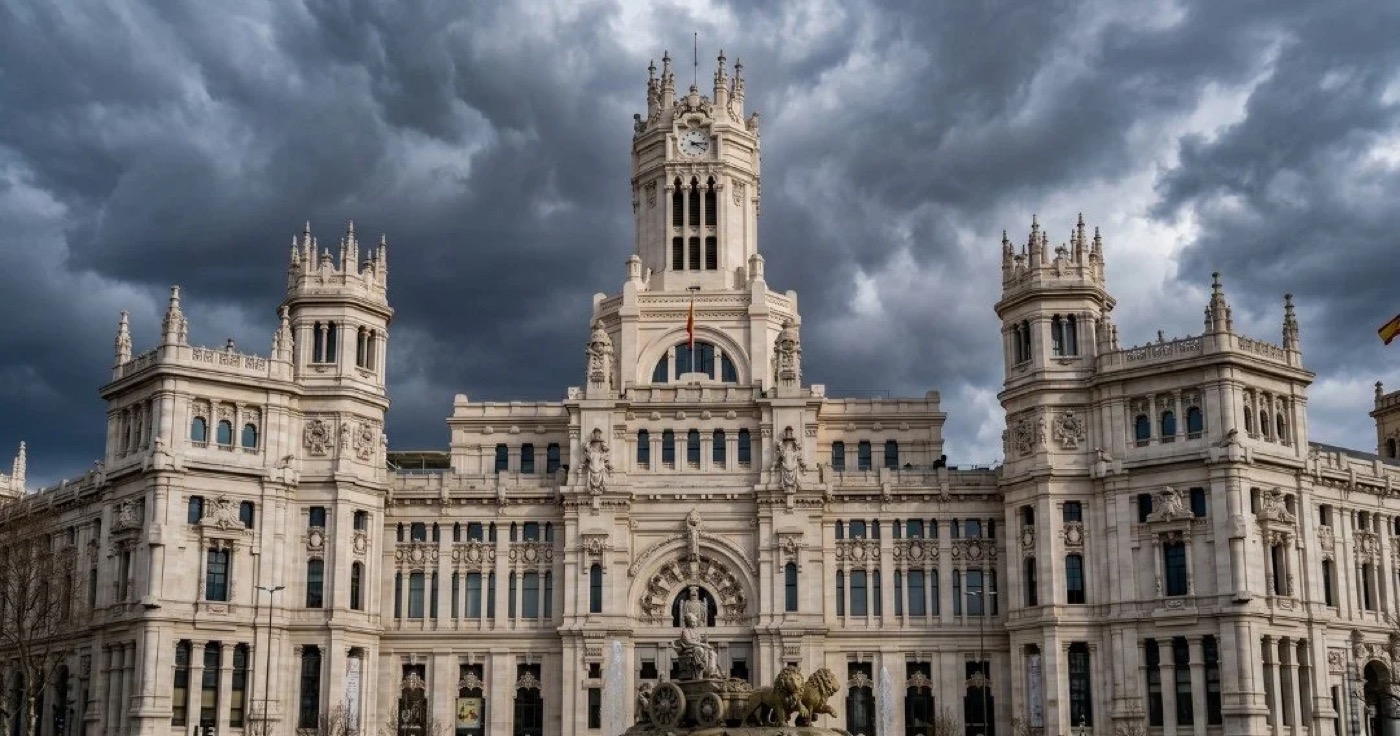
Madrid has buildings that define its skyline and others that are part of its identity. The Palacio de Cibeles belongs to both categories.
Thousands of people pass through Plaza de Cibeles every day, take photos of the fountain, admire the building’s impressive white façade, and then continue towards Gran Vía or Paseo del Prado. However, few truly know the history behind its walls, its role in Madrid’s development, or why its viewpoint has become one of the city’s best-kept secrets for taking in the view from above.
If you’re looking for a calm cultural experience, away from the crowds that gather at other viewpoints, the Palacio de Cibeles offers a different perspective: more elegant, more relaxed, and deeply Madrilenian.
A building often mistaken for a palace
It’s easy to see why people get confused. Its monumental façade, white towers and architectural style make it seem like it was designed for royalty or a historic institution linked to the monarchy.
But the reality is quite different. When construction began in the early 20th century, the building wasn’t intended to be a palace.
It was conceived as the new headquarters for Spain’s communications.
For decades, it was known as the Palacio de Comunicaciones, a massive infrastructure designed to centralise the country’s postal, telegraph and telecommunications services.
In an era when sending a letter was the main way to connect people, this building represented modernity, progress and connection.
That’s why many older Madrileños still refer to it by its original name.
The history of the Palacio de Comunicaciones
The project was designed by architects Antonio Palacios and Joaquín Otamendi.
Construction began in 1907, and the building was officially inaugurated in 1919. Its design was a complete departure from the architecture that existed in the area at the time.
While other buildings followed more traditional styles, the Palacio de Comunicaciones embraced an innovative mix of:
The result was so striking that it sparked mixed reactions for years.
Some considered it a masterpiece. Others thought it was too extravagant for Madrid at the time.
Today, it’s impossible to imagine Plaza de Cibeles without it.
Antonio Palacios: the architect who transformed Madrid
Talking about the Palacio de Cibeles means talking about Antonio Palacios. Few people have influenced Madrid’s modern image as much as he did.
In addition to the Palacio de Comunicaciones, he was involved in projects as iconic as:
His vision combined grandeur and functionality. He wanted to create buildings that were visually impressive but also practical for the city.
Over a century later, many of his works still shape Madrid’s urban landscape.
From post office to Madrid City Hall
At the start of the 21st century, the building began a new chapter. After decades as a communications hub, part of its facilities were transformed to house the Madrid City Hall.
It was then that its current name started to become popular:
The transformation opened new spaces to the public and turned the building into one of the city’s major cultural centres.
And it’s precisely this last feature that attracts more and more visitors looking for something different.
The Cibeles viewpoint: one of Madrid’s finest views
Madrid has several well-known viewpoints.
However, the one at the Palacio de Cibeles offers something unique.
It’s not just about the height. It’s about the feeling.
When you reach the top terrace, the city seems to slow down.
From here, you can take in:
The view is wide, clear and much less hectic than other panoramic spots in the city.
Unlike some popular rooftops where the experience is mixed with loud music or large crowds, the atmosphere here is usually much calmer.
Most people come to observe. Or to take photos.
To sit for a few minutes and see Madrid from a different angle.
It’s a place that invites you to stay. Not to rush.
What’s the best time to go up?
Each time of day offers a different experience.
The light is clean and perfect for photographing its imposing architecture.
There are also usually fewer visitors.
It’s probably the most spectacular time.
The city takes on golden tones, and the long shadows create a very cinematic feel.
The lights of Gran Vía, Alcalá and Castellana completely transform the landscape.
Madrid becomes quieter from above.
What to see around the Palacio de Cibeles
One of the building’s advantages is its location.
From here, you can walk to some of the city’s most important landmarks.
The Fuente de Cibeles is one of Madrid’s historic symbols and a regular setting for sports celebrations.
The combination of the fountain and the palace creates one of the capital’s most recognisable images.
Just a few minutes away is the city’s most important cultural axis.
If you’re looking for a more relaxed plan after the viewpoint, Parque del Retiro is less than a ten-minute walk away.
A perfect combination for a cultural morning or afternoon.
Why it remains one of Madrid’s most fascinating buildings
The Palacio de Cibeles embodies many of the contradictions that make Madrid special.
It started as a post office.
Today, it’s one of the city’s most admired buildings.
Its innovative design was criticised.
Now, it’s one of the most beloved architectural works for both Madrileños and visitors.
And while thousands of people pass by it every day, many still haven’t discovered its best feature: one of the most elegant and serene views in the entire capital.
If you want to understand Madrid beyond its most famous monuments, the Palacio de Cibeles is a stop you shouldn’t miss.
MadBlog
Keep reading
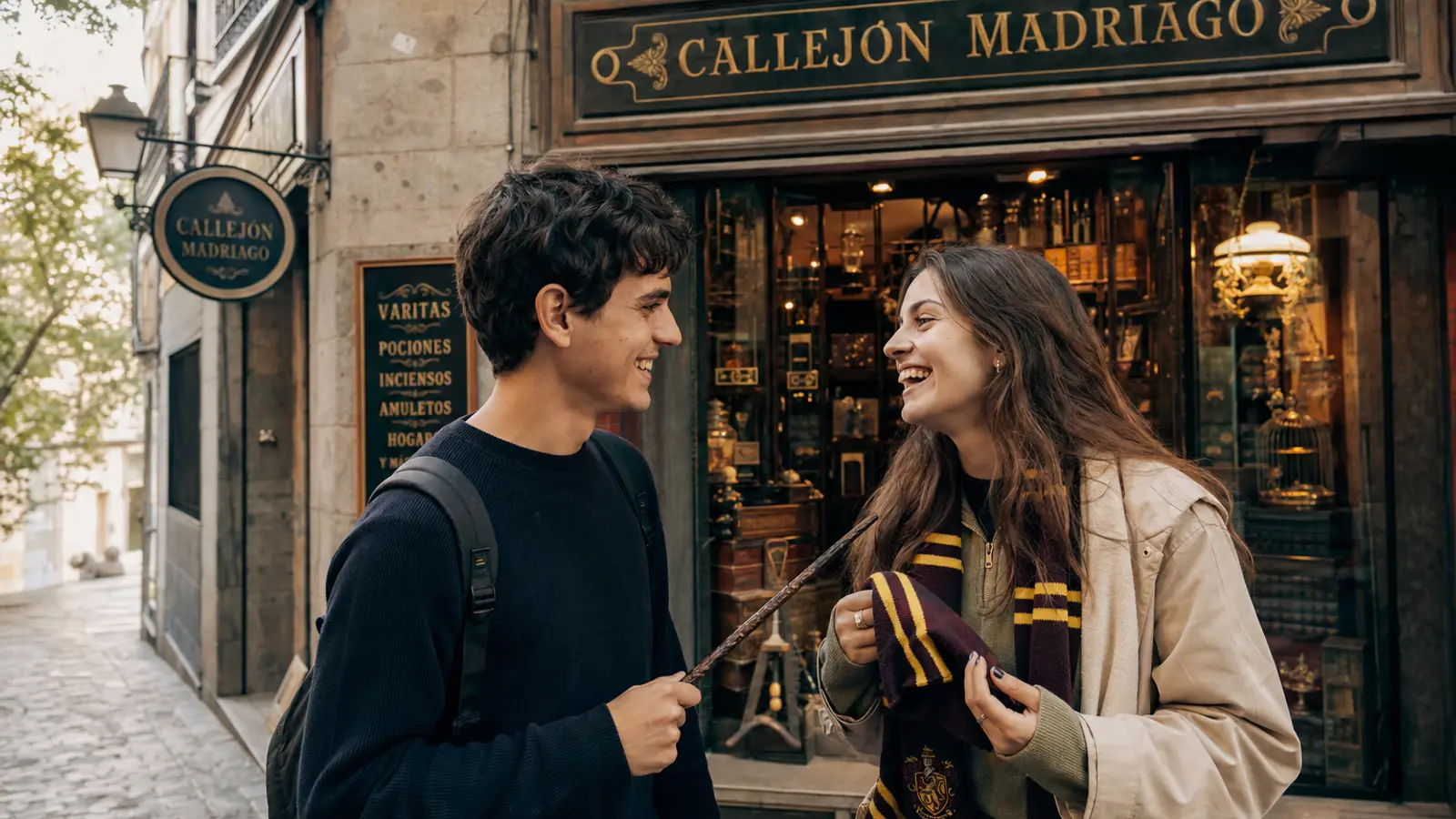
Harry Potter en Madrid: planes y rincones mágicos
Descubre planes temáticos de Harry Potter en Madrid: exposiciones, tiendas, cafeterías y actividades para fans. ¡Magia cerca de Gran Vía!
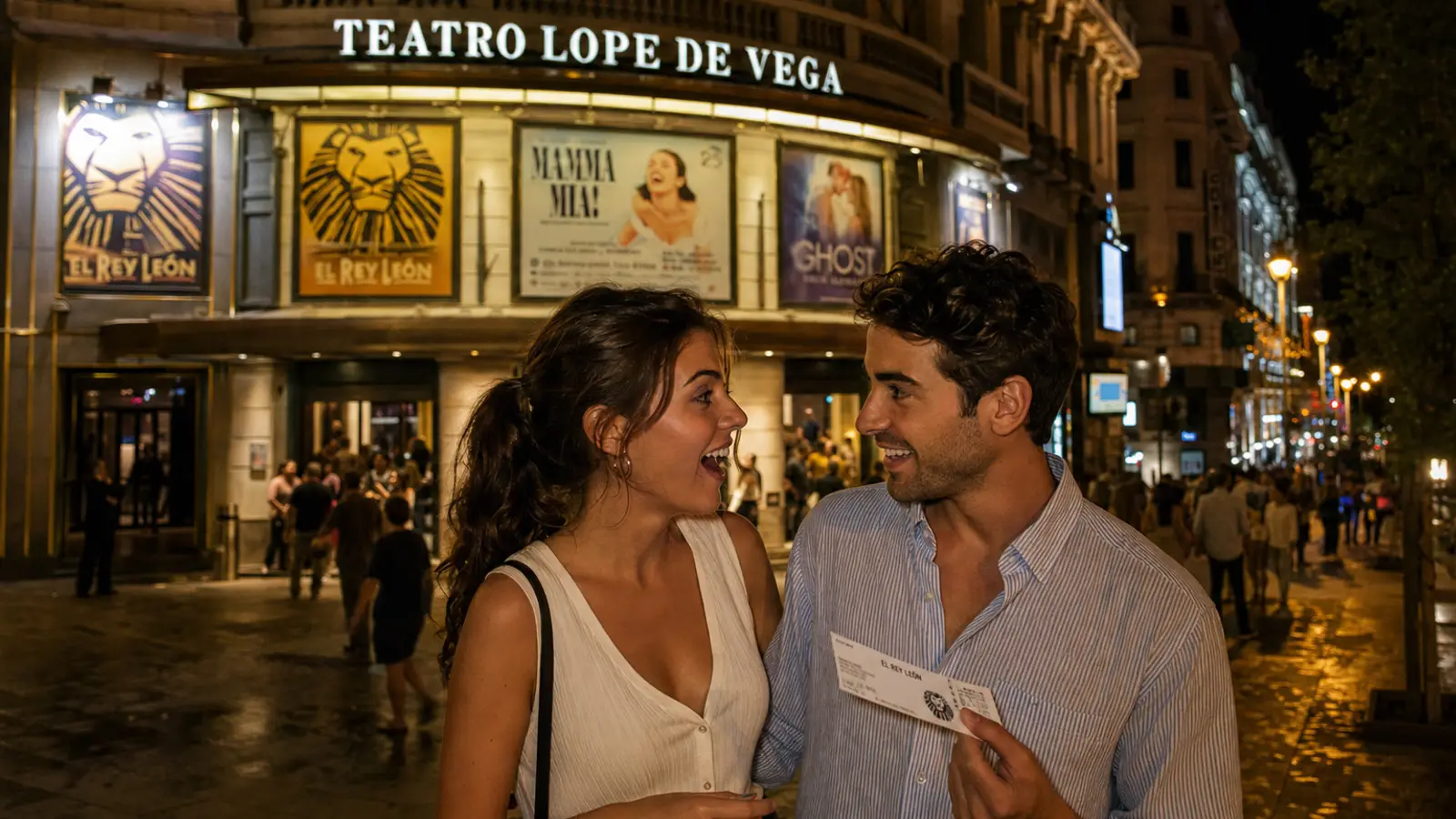
Musicales en Gran Vía 2026: todo lo que necesitas saber
Descubre los mejores musicales en Gran Vía para 2026: horarios, precios, teatros y espectáculos imprescindibles. A un minuto de MadVibes Hostel.
Apertura Madrid Gallery Weekend: arte contemporáneo gratis hasta hoy domingo
Último día para disfrutar de Apertura Madrid Gallery Weekend 2023. Arte contemporáneo gratis en galerías del centro, a minutos de MadVibes Hostel.