

MadBlog
San Isidro Festival Madrid 2026: history, plans and key times
Practical guide to San Isidro 2026 in Madrid: patron saint's history, what to do, key dates and times (Maya, Cacharrería, fireworks and more).
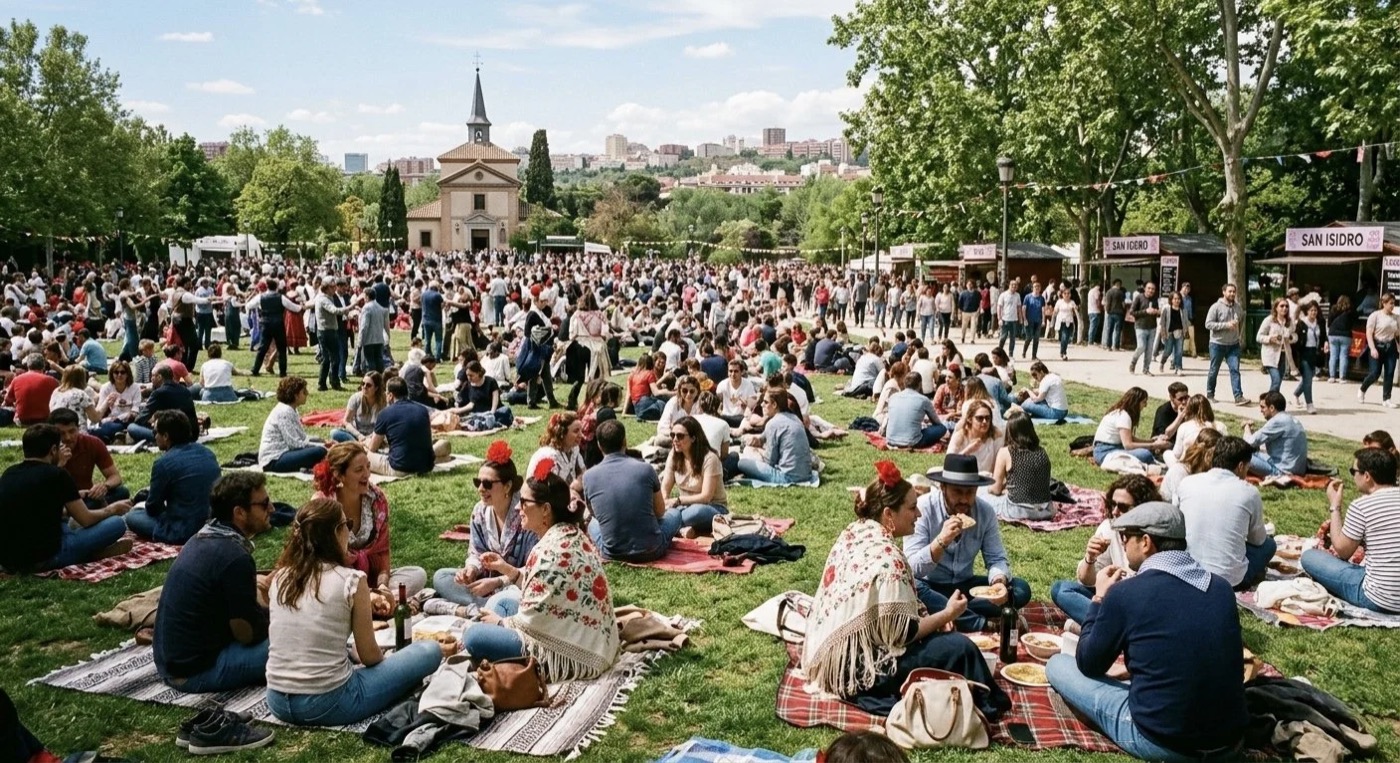
The Pradera: the traditional heart of San Isidro.
Madrid has many big dates, but few feel as rooted in the city as San Isidro. It’s not just a concert line-up; it’s a collective ritual blending urban pilgrimage, traditional food, religious customs and cultural events in the squares. And the best part (if you’re staying near Gran Vía) is that you can enjoy it fully without sacrificing a good night’s sleep: plan your day, return to the centre and rest properly.
A bit of history: who was San Isidro and why does Madrid celebrate him?
San Isidro Labrador is Madrid’s popular patron saint: a “day-to-day” saint (a farmer, married, with a child) whose story grew through tales and devotion until he became a symbol of the city. The Ayuntamiento (City Council) notes that he was canonised in 1622 by Pope Gregory XV, an event celebrated in a historic ceremony alongside four other saints.
For those who like to dig deeper, there’s a very Madrid-specific angle: San Isidro isn’t a “distant” patron but a figure tied to specific places on the map (La Latina, the Colegiata, the Pradera, the hermitage). Bibliotecas de Madrid explains that much of the tradition is based on medieval sources and the so-called Codex of Juan Diácono (13th century), which fuels the legend and popular devotion.
The Congregación de San Isidro also highlights a key historical detail: the canonisation was dated 12 March 1622, and San Isidro became a major devotional and civic figure for the city.
San Isidro tastes like rosquillas (and lemon).
What are the San Isidro celebrations and how do you experience them (without pretence)?
You don’t “attend” San Isidro; you stroll through it. The essence lies in the Pradera de San Isidro (Carabanchel) and the tradition that mixes the religious with the popular: visiting the area around the hermitage and fountain, then staying to picnic, dance or simply take in Madrid in full fair mode. Turismo Madrid summarises this tradition: a pilgrimage to the Pradera, lemonade and rosquillas, and events spread across venues like Plaza Mayor, Vistillas, Matadero and the Pradera itself.
The “historical” part that fascinates visitors most is the water: the Fuente de San Isidro (San Isidro Fountain) is open daily from 9:00 to 15:00 (free entry). The Ermita de San Isidro (San Isidro Hermitage, also free) is open Tuesday to Sunday from 10:00 to 14:00, with services on weekends at 12:00.
San Isidro 2026: key dates and times already announced
What matters for 2026: the main day, 15 May, falls on a Friday (perfect for a long weekend), and the programme is concentrated in the first half of May.
Plans with confirmed times (so you can start organising)
San Isidro is all about streets and squares. Your base is better central and quiet: head out to the fair and return to truly rest.
The oldest gesture: the saint’s water.
Plans to experience San Isidro in Madrid
1) Pradera + hermitage + “saint’s water” (the essential plan)
This is the heart of San Isidro. The perfect combination is simple: stroll through the Pradera, visit the Fountain (9:00–15:00) and stop by the Hermitage (10:00–14:00, Tuesday to Sunday). The atmosphere is festive, family-friendly and very local: carnations, chotis (a traditional dance), stalls, people picnicking. You don’t need to dress up to enjoy it; just go with an open mind, ready to look, taste and wander at your own pace.
Insider tip (very practical): if your priority is to “see the tradition” rather than the concerts, go in the morning or early afternoon and leave the evening for the city centre. That way, you experience the traditional side without endless queues.
2) Plaza Mayor / Vistillas / Matadero: culture and music in city venues
Although the detailed schedules by venue are published closer to the date, the pattern is consistent: several venues across Madrid host events ranging from music and performances to traditional activities. For those staying near Gran Vía, this is ideal: enjoy a “dose” of the festival at a central venue and walk back (or take a short trip) without turning the night into a logistical challenge.
3) Cacharrería (Comendadoras): the traditional plan that doesn’t feel “touristy”
From 11 to 15 May (10:00–21:00), the Cacharrería is one of the best options if you want to take home a souvenir that isn’t a fridge magnet: ceramics, pottery and crafted pieces in a lovely setting. It’s a perfect plan to combine with Conde Duque or Malasaña in the late afternoon, without needing “reservations” or festival-level energy.
4) Feria del Libro Antiguo y de Ocasión (Recoletos): San Isidro with an elegant stroll
From 30 April to 17 May (11:00–21:00), Recoletos turns into a literary promenade (old books, rarities, first editions, curiosities). It’s particularly good if you’re looking for a quiet plan during the week or before diving into the fair: it’s cultural Madrid, without the noise, with that “treasure hunt” feel that’s so appealing.
5) Fireworks (15 May, 23:59): the classic finale
The finale is set: 23:59 on 15 May. Here’s the simple advice: if you want to see them but don’t fancy the post-fireworks traffic, watch and head back to the centre calmly (best with a direct route and no improvising).
During San Isidro, Madrid fills up. The difference lies in where you sleep: central for convenience, quiet for rest.
The classic finale: San Isidro in Madrid’s night sky.
MadBlog
Keep reading
Harry Potter en Madrid: planes y rincones mágicos
Descubre planes temáticos de Harry Potter en Madrid: exposiciones, tiendas, cafeterías y actividades para fans. ¡Magia cerca de Gran Vía!
Musicales en Gran Vía 2026: todo lo que necesitas saber
Descubre los mejores musicales en Gran Vía para 2026: horarios, precios, teatros y espectáculos imprescindibles. A un minuto de MadVibes Hostel.
Apertura Madrid Gallery Weekend: arte contemporáneo gratis hasta hoy domingo
Último día para disfrutar de Apertura Madrid Gallery Weekend 2023. Arte contemporáneo gratis en galerías del centro, a minutos de MadVibes Hostel.