

MadBlog
Where to sleep well in central Madrid: tips and areas to avoid
Learn how to sleep peacefully in central Madrid with practical tips and a guide to areas to avoid for a restful stay near Gran Vía.

If you've ever thought, 'Madrid is amazing, but... why didn't I sleep at all?', you're not alone. The centre has two sides: the theatres, tapas and lights... and the terraces that stay open late, heavy traffic and streets where nightlife is the soundtrack.
The good news: yes, you can sleep well right in the centre, but you need to play it smart. In this guide, we share tips that genuinely work (before booking, at check-in and in your room), and highlight areas to avoid if your priority is a good night's sleep.
If you're coming to Madrid to explore and need to recharge at night, at MadVibes our philosophy is clear: quality rest in the heart of the city. Check out our room options and pick the one that suits you best.
First, understand the 'noise' of the centre (to tackle it effectively)
Noise in central Madrid isn't just one thing. There are three types, and each needs a different solution:
1) Leisure noise (terraces + people + closing times)
This is the trickiest because it's not constant: it peaks at dinner time (late) and stretches into the night with drinks. Plus, it has set hours.
2) Traffic noise (Gran Vía + main thoroughfares)
This isn't so much 'party' noise as a constant hum: buses, motorbikes, braking, occasional sirens. It can be manageable... or exhausting if you're a light sleeper.
3) 'Logistical' street noise
Deliveries, bins, shutters, metal doors, people coming and going. Here's the golden rule: a quiet street by day can be noisy at night.
Areas to avoid (if sleeping well is your priority)
Let's be specific, because vague advice isn't helpful. The City Council identified areas in the Centro District with high noise pollution due to concentrations of nightlife: around Malasaña, the Chueca area 'to the right of Hortaleza', the Cavas and the area around Plaza de Santa Ana (Huertas). Ayuntamiento de Madrid
1) Malasaña (especially around squares and bar streets)
Malasaña is fun, yes. But if your plan is to sleep eight hours straight, think twice. The typical pattern:
2) Chueca (beware the area towards the right side of Hortaleza)
Chueca is lively almost all year round. Between terraces, venues and general movement, the issue isn't a sudden 'boom' but a constant trickle: people smoking outside, chatting under your window, doors opening and closing.
If you want real silence: better to sleep 10–15 minutes' walk away and visit Chueca for dinner or a night out.
3) The Cavas (Cava Baja/Cava Alta and surrounding streets)
A lovely area for wine bars. For sleeping, it's tricky: narrow streets + high foot traffic = sound bouncing everywhere.
4) Huertas / Plaza de Santa Ana (and its 'terrace radius')
Huertas is the perfect example of 'great for going out, not for sleeping'. When a terrace is below, your window becomes a loudspeaker.
Quick diagnosis: if you see 3–4 terraces in a row under your façade on Street View, you know what to expect.
Quieter areas (without leaving the 'centre-centre')
There's no magic here: in the tourist heart, there will always be activity. But there are what I call 'pockets of calm'.
1) Palacio / Plaza de Oriente / Senado
This area feels more residential and 'open', with fewer bars crammed door-to-door. A very good option for quieter nights.
2) Austrias (but avoiding the pull of La Latina/Cavas)
If you move towards streets with less continuous hospitality, the rest improves significantly.
3) Edge of Gran Vía: sleep nearby, but not on top
Gran Vía is very central but can be noisy at times. The smart move: stay 2–4 minutes' walk away, on a street less exposed to traffic. For example, Mesoneros Romanos ;).
This is where MadVibes fits in: you're in the centre and can walk everywhere, but your rest depends on choosing the right room and orientation. On our website, we frame it as 'quality rest in the heart of the city'.
1) Ask (literally) this: 'Does the room face the street or an interior courtyard?'
Not 'Is it quiet?', because that's a marketing answer. The right question is about orientation. If it faces a courtyard, you usually win.
2) Avoid sleeping 'above' hospitality
Remember that in the seasonal period, terraces can stay open until 01:30 on Fridays, Saturdays and eves of public holidays. Boletín Comunidad de Madrid
3) On your schedule, not the city's
Madrid dines late. If you go to bed early:
Tips at check-in (what you do in 60 seconds and feel all night)
1) Request a 'high room' (if available) + 'away from the lift'
This isn't just for show: fewer footsteps, fewer slamming doors in the corridor, less suitcase dragging.
2) If you're a super light sleeper: earplugs + white noise
Earplugs alone sometimes aren't enough against voices. The combination that works:
Sleeping well without skipping nights out: the 'smart centre' strategy
The idea isn't to stay in a dead neighbourhood. It's to separate nightlife and your rest zone.
Bonus tip: the general Metro hours are 6:00 to 1:30 (last trains around this time). CRTM+1 (Watch out for special days/works, but as a general rule, it helps with planning.)
Perfect. So don't think of it as 'Gran Vía or silence', but as 'Gran Vía + the right room'. On Booking, MadVibes is listed as a hostel near Gran Vía with 24-hour reception, free Wi-Fi and common areas like a lounge for reading/eating/working, as well as its location near Callao and Sol. This fits with a very central but organised plan: arrive, check in quickly, walk everywhere... and rest well at night.
If your priority is to sleep well and be steps away from everything, see which type of room suits you (private double if you're a couple / small dormitory if you want balance) and take advantage of the temporary 10% discount on the website.
Madrid is better when you actually sleep
Central Madrid is a treat... as long as rest isn't the price you pay. With the right areas (or avoiding the noisiest ones), a well-chosen room and three simple tips, you can turn your trip into what it should be: exploring, eating well, seeing a musical, and waking up energised.
MadBlog
Keep reading
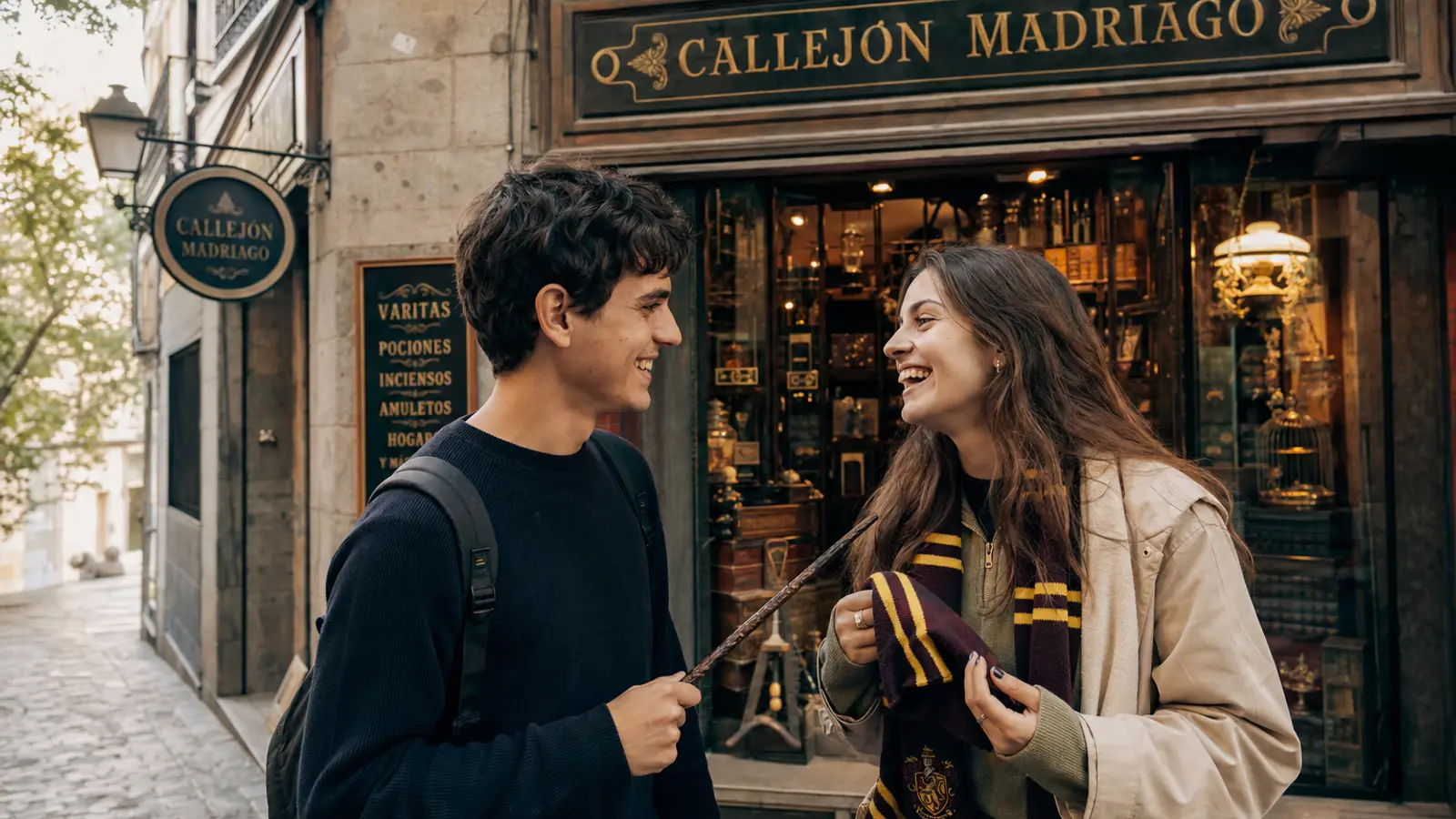
Harry Potter en Madrid: planes y rincones mágicos
Descubre planes temáticos de Harry Potter en Madrid: exposiciones, tiendas, cafeterías y actividades para fans. ¡Magia cerca de Gran Vía!
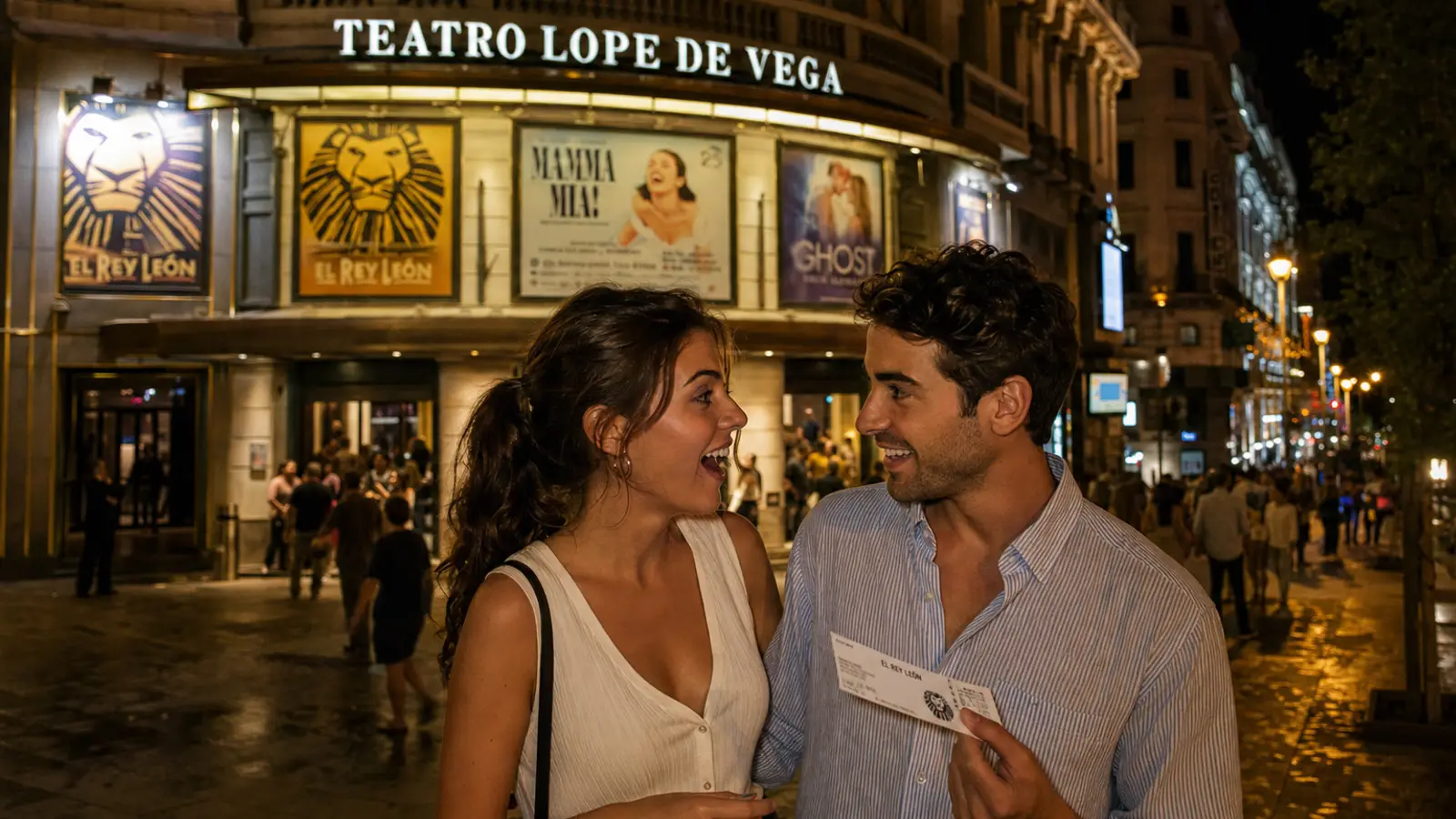
Musicales en Gran Vía 2026: todo lo que necesitas saber
Descubre los mejores musicales en Gran Vía para 2026: horarios, precios, teatros y espectáculos imprescindibles. A un minuto de MadVibes Hostel.
Apertura Madrid Gallery Weekend: arte contemporáneo gratis hasta hoy domingo
Último día para disfrutar de Apertura Madrid Gallery Weekend 2023. Arte contemporáneo gratis en galerías del centro, a minutos de MadVibes Hostel.